City of Palm Springs Voids Bogert Statue Relocation Decision
Urban Palm Springs Staff
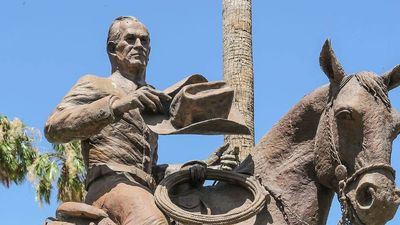
In a dramatic turn in the ongoing controversy over the future of the Frank Bogert statue, the Palm Springs City Council voted on January 14, 2026 to void the recent decision by the Public Arts Commission that would have relocated the statue to Village Green. The council’s action was taken after legal staff raised concerns about a potential violation of the California Brown Act — the state’s open-meetings law — during a discussion at the November 12, 2025 council meeting.
The Public Arts Commission had voted on January 8, 2026 to move the statue from long-term storage to the Village Green — a historic downtown civic space — following emotional testimony from both supporters and critics of the memorial. That decision included an amendment to require an educational component about the controversy surrounding Frank Bogert’s legacy and the undeniable trauma of the Section 14 displacement.
However, City Attorney Jeff Ballinger advised Councilmembers that the Arts Commission’s action is now considered void because the original directive for the statute’s relocation stemmed from an out-of-agenda exchange at the Council’s November 12 meeting — specifically during the portion where members suggest future agenda items — without proper public notice as required under the Brown Act. As a result, the council determined that the Arts Commission’s January 8 decision cannot stand, and the statue will remain in storage while next steps are evaluated.
What This Means for the Community
For many Section 14 Survivors and their descendants, the voiding of the relocation decision is a significant development that reflects both the deep tension surrounding the statue and the continued need for inclusive, transparent community processes.
Since its removal from in front of City Hall in 2022 — after mounting advocacy from survivors and a report by the city’s Human Rights Commission linking Bogert to the forced displacement of Section 14 residents — the statue has remained in storage amid calls for the city to confront its history more fully.
Opponents of the statue’s relocation have consistently argued that placing the memorial in a prominent public space — even with an educational component — would recast a painful legacy as celebratory without adequately honoring the lived experiences of those whose families were uprooted. Survivors and descendants maintain that true reconciliation must center their voices, historical truth, and educational commemoration that uplifts those who were harmed.
Supporters of the relocation — including some local historians and members of the Friends of Frank Bogert — have disputed claims about Bogert’s culpability, framing him as an influential civic leader whose contributions helped shape modern Palm Springs. They have advocated for a contextualized display that includes interpretive context. However, that vision now awaits further deliberation under proper Brown Act compliance.
A Call for Transparent, Inclusive Next Steps
City leadership’s decision to void the Arts Commission’s vote underscores broader questions about how Palm Springs engages the public on matters of historical memory and civic symbols. Section 14 Survivors and their descendants have repeatedly emphasized that decisions about how history is remembered in public spaces must not be rushed or conducted without meaningful community engagement.
Advocates are urging the City Council to take this moment not just to correct procedural missteps, but to reaffirm its commitment to inclusive dialogue — potentially through convening community advisory forums, expanded historical interpretation initiatives, or a dedicated memorial process that collectively honors Section 14 history.
As Palm Springs continues to evolve in how it addresses the deeply painful legacy of Section 14, the future of the Frank Bogert statue remains unresolved — a symbol not only of the city’s past disputes, but of the ongoing struggle for equitable public remembrance and justice.

Black History Tour
2-3hrs. $125 per person
Beginning on the Agua Caliente Indian Reservation Section 14. This tour will introduce you to Black pioneers of our city. See the works of renowned architect Paul R. Williams. Learn about land developer Lawrence Crossley. Tour concludes at Desert Highland Gateway Estates - Palm Springs’ largest predominantly Black Neighborhood